Why Wind and Heat Matter Across the Coachella Valley
Tree emergencies happen across the valley, but the exposure isn't the same everywhere. Palm Springs, Cathedral City, and Desert Hot Springs sit closer to the San Gorgonio Pass wind corridor, where strong westerly winds move into the valley with blowing dust and damaging gusts. National Weather Service advisories for the Coachella Valley routinely name Palm Springs, Cathedral City, Palm Desert, La Quinta, Indio, and Coachella together. One advisory called for 25-35 mph west winds, gusts to 50 mph, and isolated gusts to 65 mph through the passes, warning that tree limbs could be blown down.
The east valley adds extreme heat. Western Regional Climate Center records for Indio show an average July high of 106.9°F and about 182 days a year at 90°F or hotter. In the hot months, a fallen tree is more than a cleanup job when it blocks the driveway, breaks irrigation, damages the AC unit, or keeps you from getting into the house. Heat also affects how we stage a complicated emergency job.
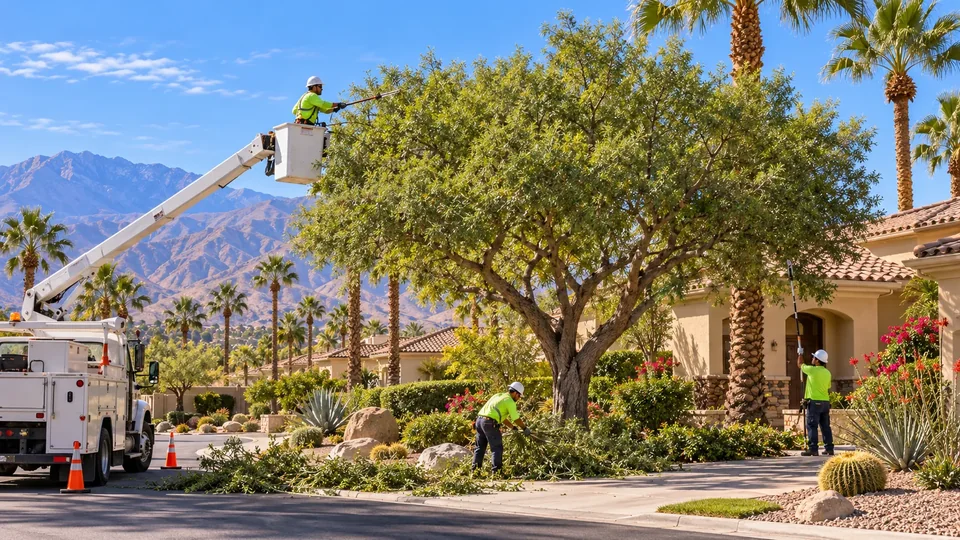
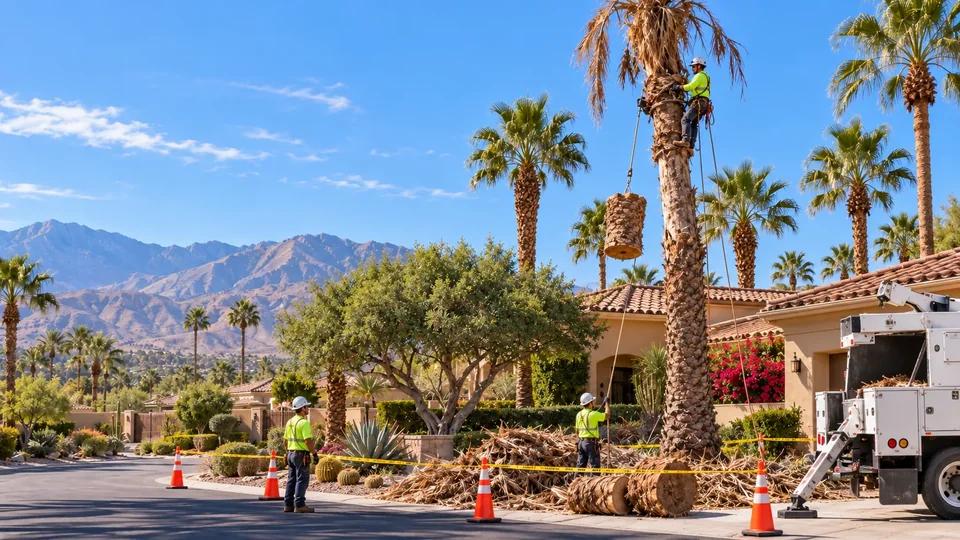
The property changes the response too. A broken limb over an older Palm Springs roof, a failed tree in a Rancho Mirage or Palm Desert HOA common area, a damaged palm beside a La Quinta pool, and a fallen tree blocking access in Indio are all emergencies, but the equipment and work zone are very different. When you call, the exact address, gate access, safe photos, and whether the hazard touches a structure or a utility line tell us more than the city name.