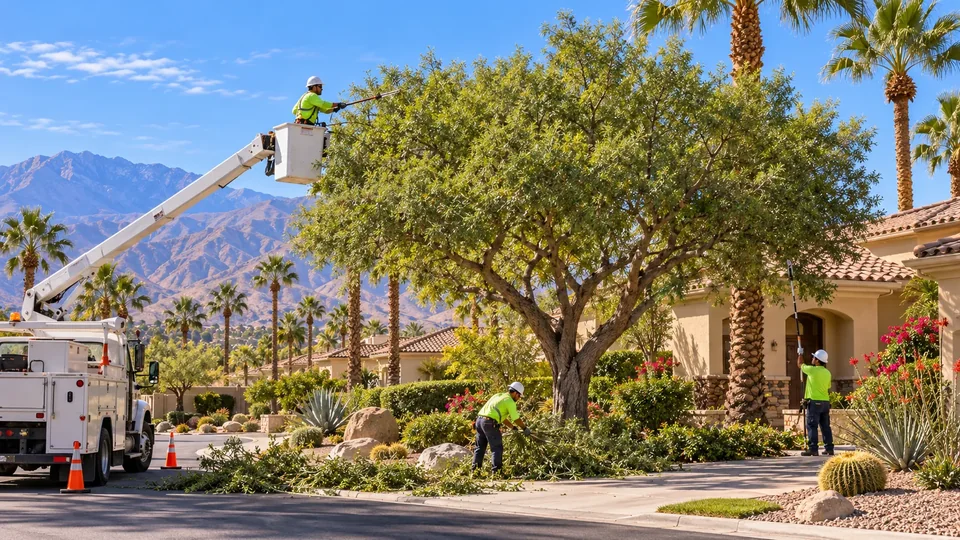
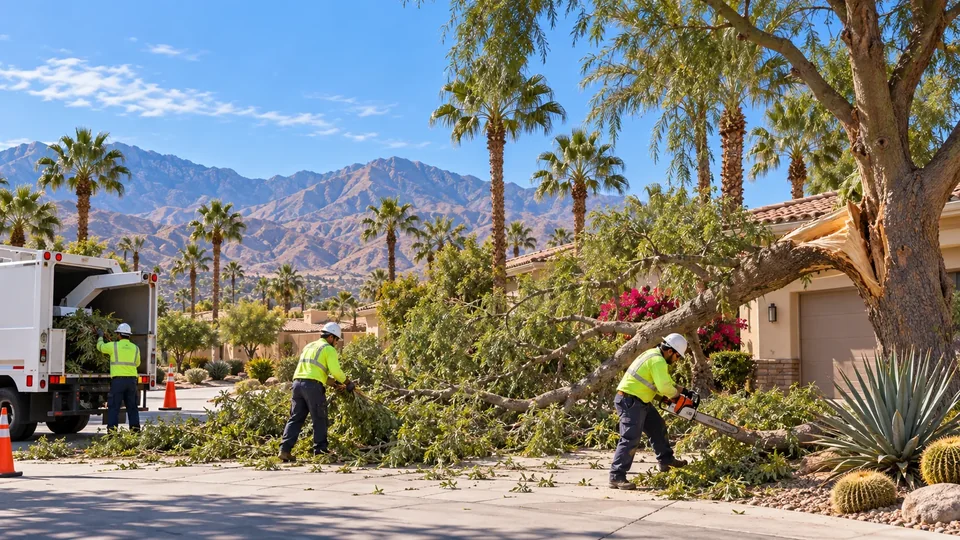
Why Palm Work Is Different in the Coachella Valley
Palm care is a local subject here. UC agricultural economists identify the Coachella Valley as the main date-growing region in the United States, with about 6,160 planted acres of date palms and roughly 95% of the nation's crop. The east valley around Indio, Coachella, Thermal, and Mecca carries much of that farming identity, while Palm Springs, Cathedral City, Rancho Mirage, Palm Desert, Indian Wells, and La Quinta use palms heavily in streetscapes, resorts, golf communities, commercial entries, and home landscapes. Indio's date history goes back more than a century, to work at the USDA Date Station that began in 1907. Palms are part of the landscape, the farming, and the identity of the whole valley.
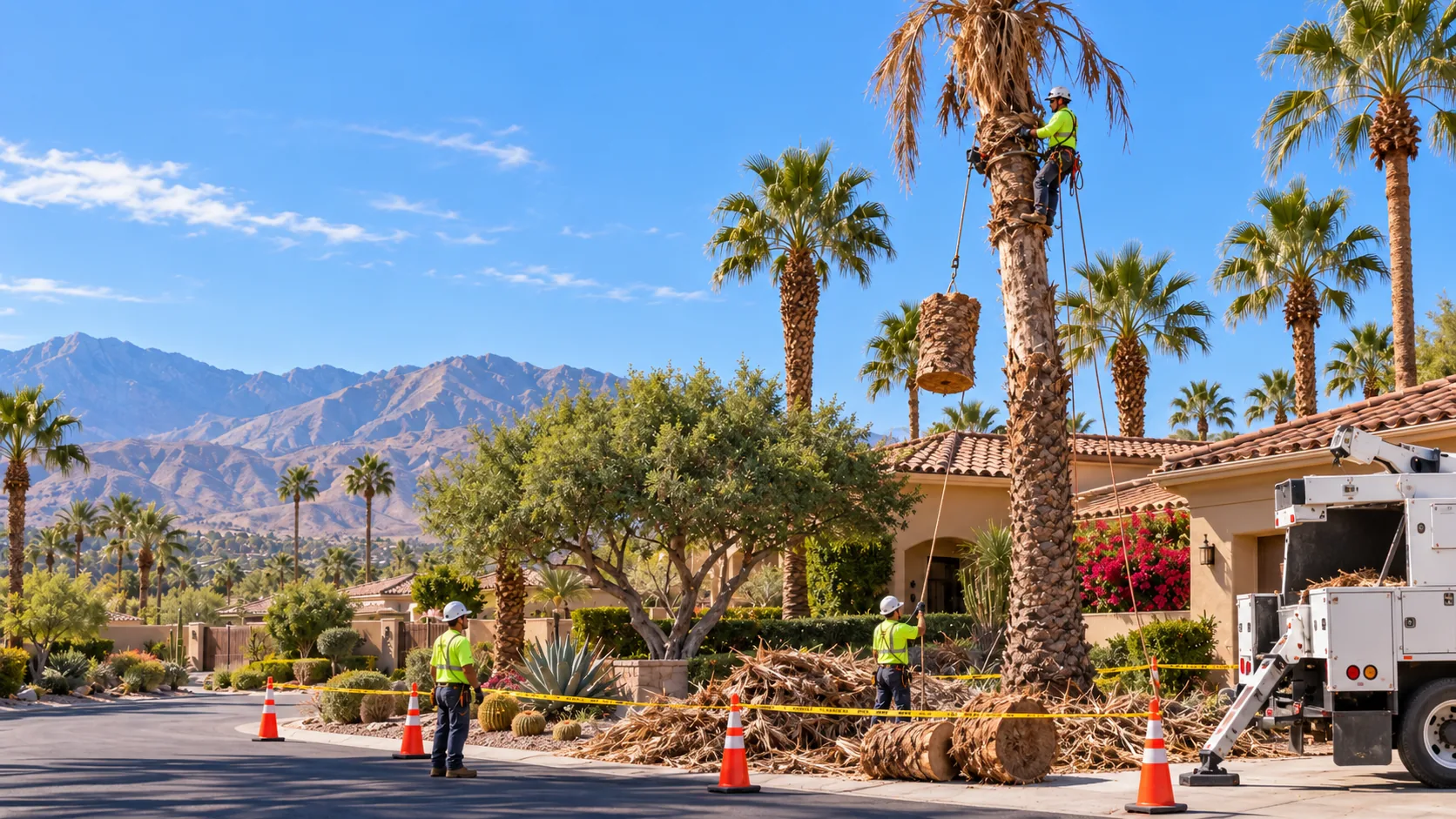
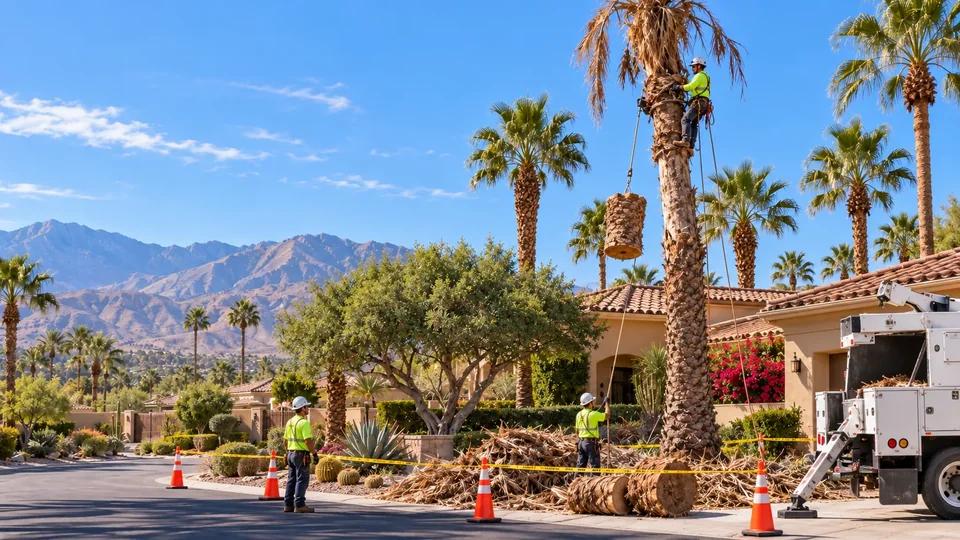
Poor pruning can spread disease. UC Integrated Pest Management warns that Fusarium wilt of Canary Island date palm is commonly moved on contaminated pruning tools, and that contaminated sawdust can drift as far as 100 feet. UC recommends cleaning and disinfecting tools thoroughly before working on each palm and avoiding excessive pruning.
Heat makes timing and keeping a full crown important too. Western Regional Climate Center records for Indio put the average July high at 106.9°F and the August high at 105.7°F, with about 182 days a year at 90°F or hotter. West-valley palms also take stronger wind near the San Gorgonio Pass. Taking off dead fronds and fruit stalks is one thing; stripping large amounts of healthy green foliage is another. We aim for a clean, safe palm, not a full crown cut down to a tuft at the top of the trunk.