Why Wind and Heat Matter Across the Coachella Valley
Tree emergencies are a valley-wide issue, but the exposure is not identical everywhere. Palm Springs, Cathedral City, and Desert Hot Springs sit closer to the San Gorgonio Pass wind corridor, where strong westerly events can move into the valley with blowing dust and damaging gusts. National Weather Service advisories for the Coachella Valley routinely name Palm Springs, Cathedral City, Palm Desert, La Quinta, Indio, and Coachella together. One 2026 advisory called for 25-35 mph west winds, gusts to 50 mph, and isolated gusts to 65 mph through the passes, specifically warning that tree limbs could be blown down.
The east valley adds extreme heat to the risk picture. Western Regional Climate Center period-of-record data for Indio shows an average July high of 106.9°F and about 182 days per year reaching 90°F or hotter. During hot months, a fallen tree can become more than a cleanup problem if it blocks a driveway, damages irrigation, shades or damages HVAC equipment, or prevents access to a home. Crews also need to manage their own heat exposure, which can affect how a complicated emergency is staged.
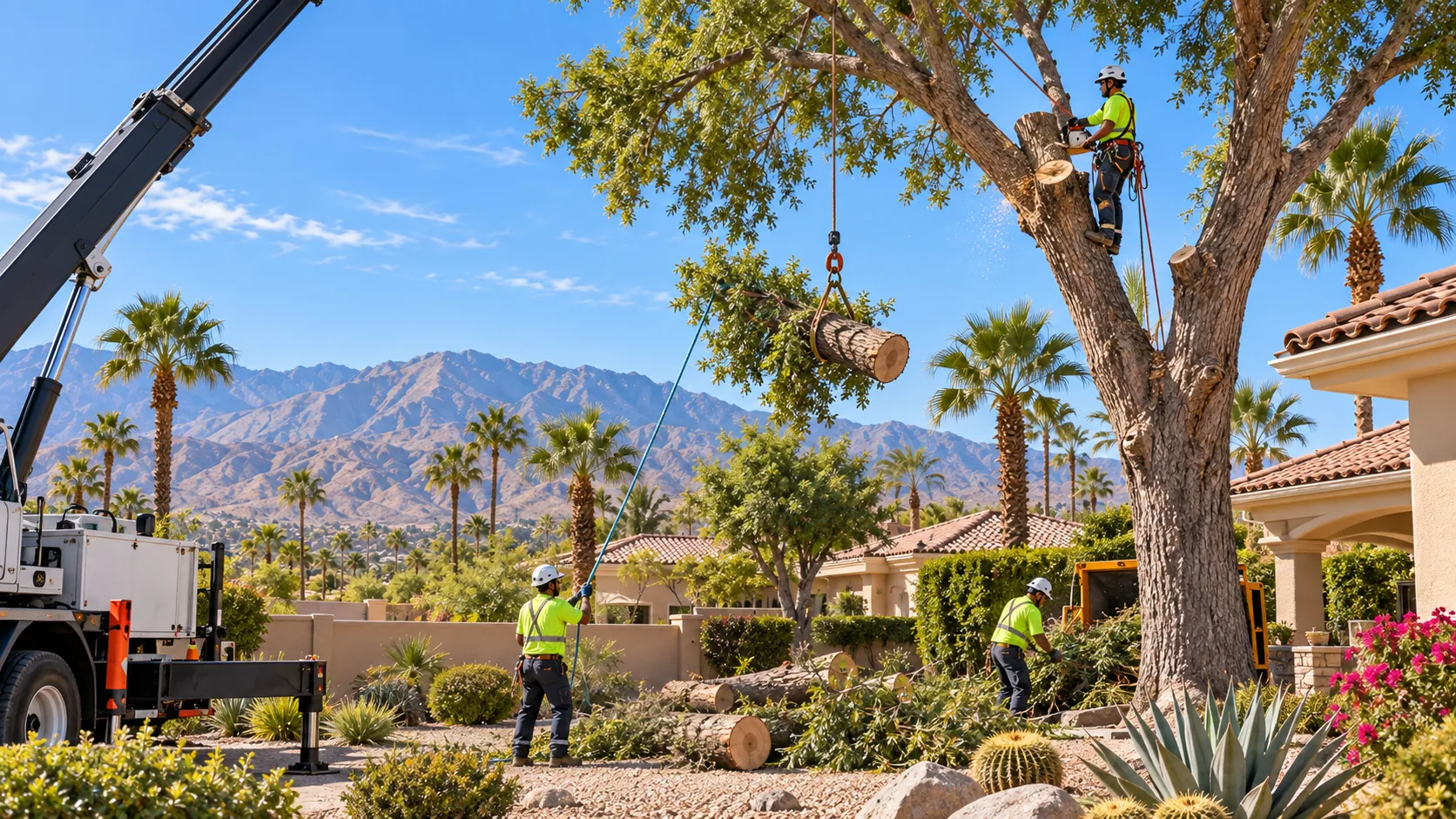
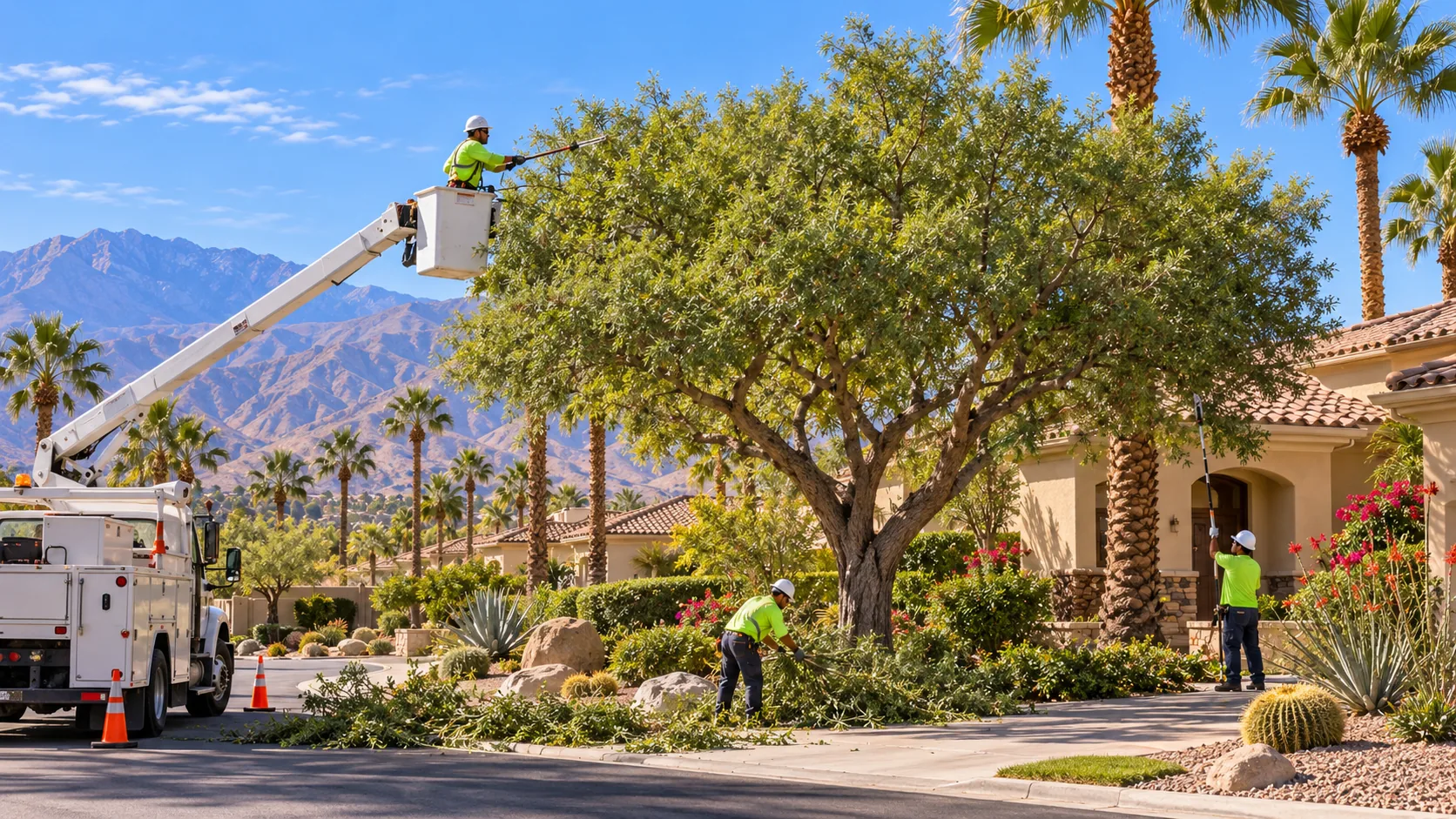
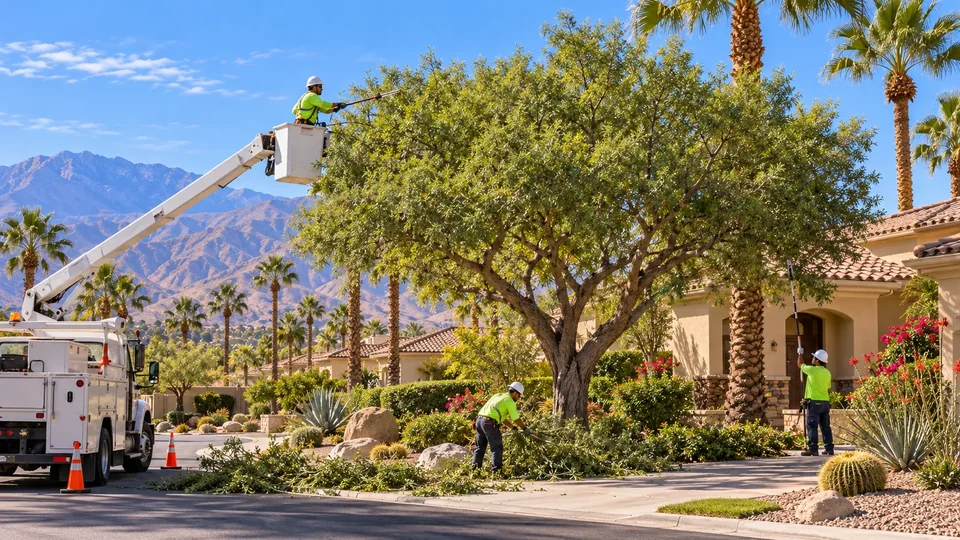
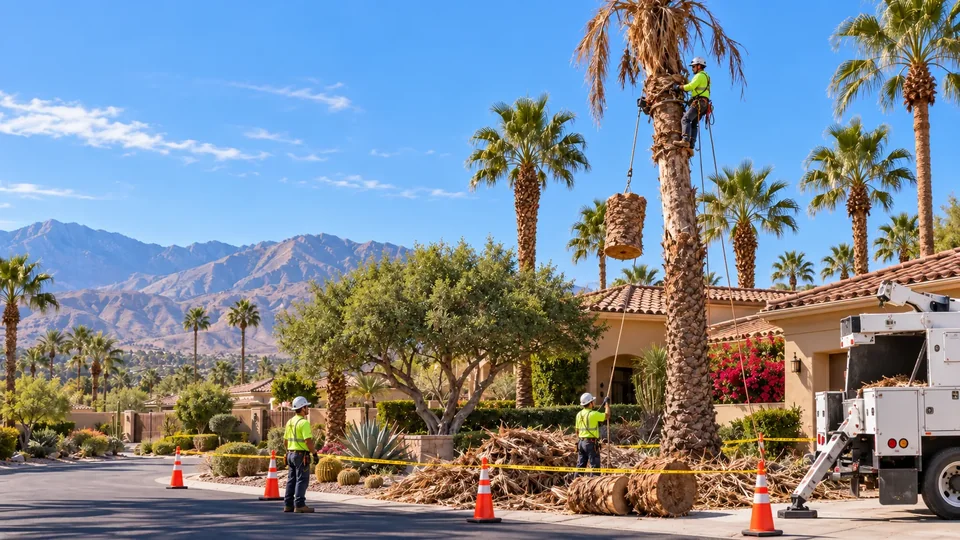
Property type changes the response as well. A broken limb over an older Palm Springs roof, a failed tree in a Rancho Mirage or Palm Desert HOA common area, a damaged palm beside a La Quinta pool, or a fallen tree blocking access in Indio are all emergency-tree jobs, but the equipment and work zone can be very different. When requesting urgent service, the exact address, gate access, safe photos, and whether the hazard touches a structure or utility line are more useful than the city name alone.