Why Palm Work Is Different in the Coachella Valley
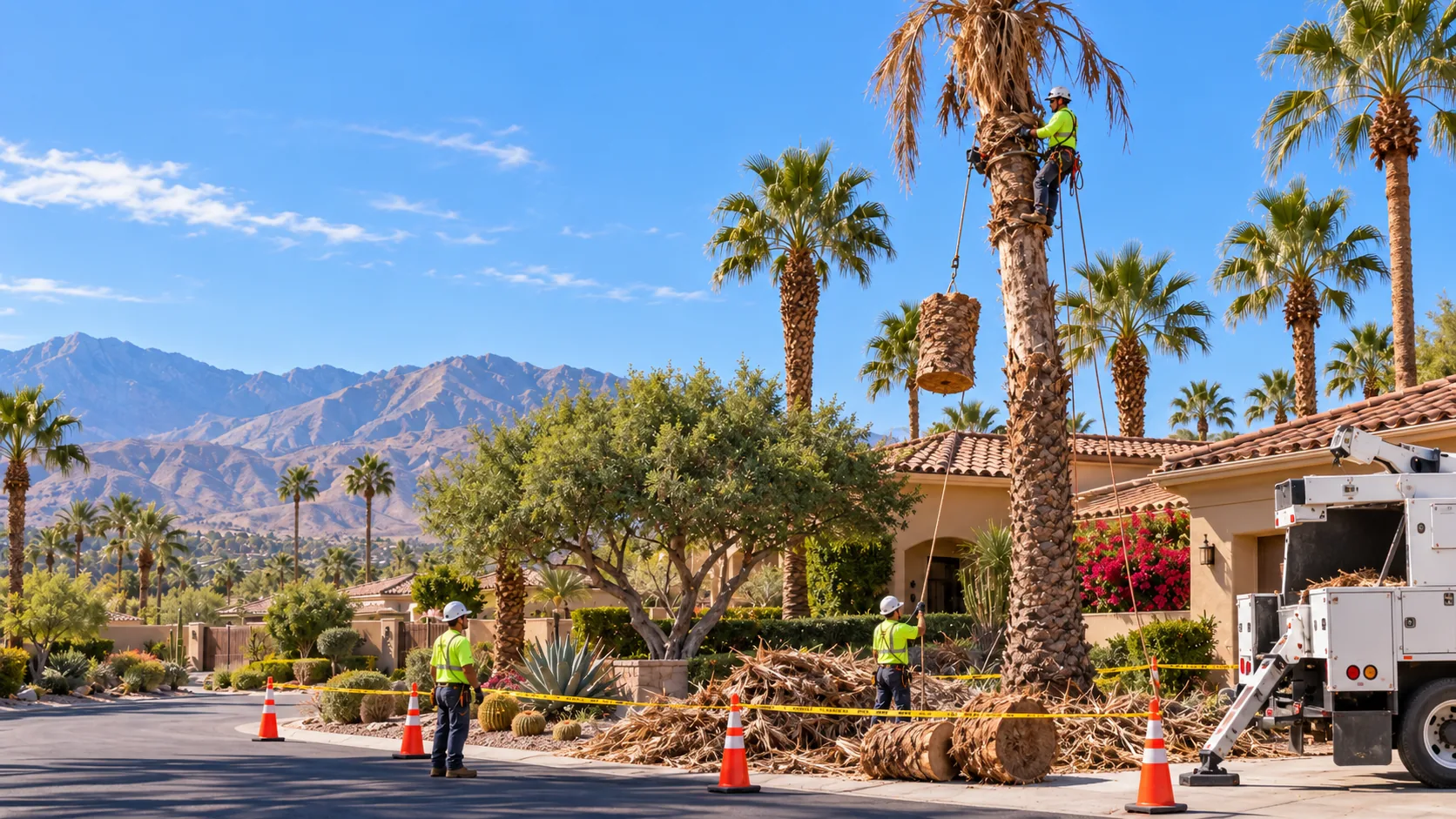
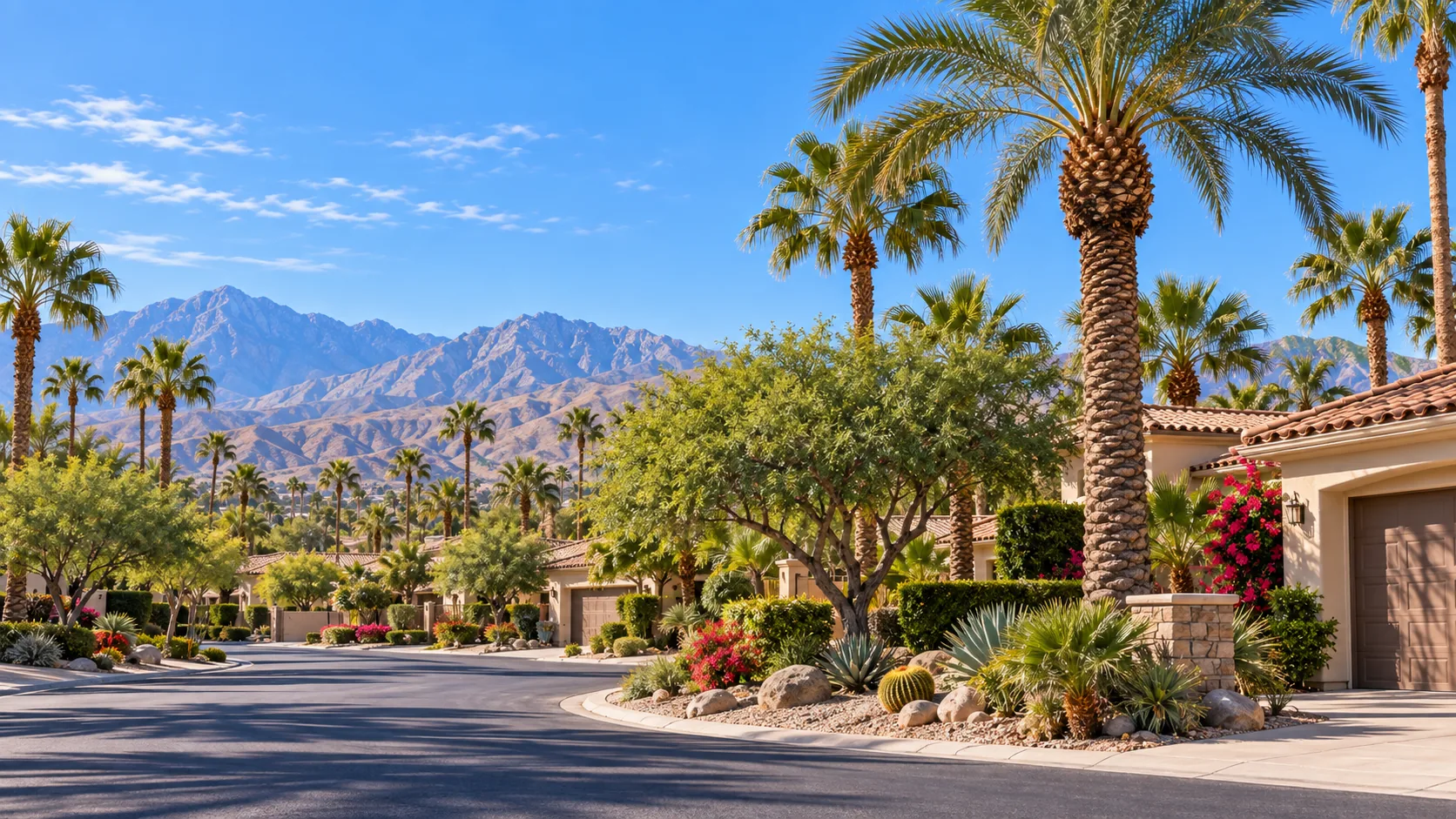
Palm care is unusually local here. UC agricultural-economics material identifies the Coachella Valley as the primary date-growing region in the United States, with about 6,160 planted acres of date palms and roughly 95% of the nation's crop. The east valley around Indio, Coachella, Thermal, and Mecca carries much of the agricultural/date-palm identity, while Palm Springs, Cathedral City, Rancho Mirage, Palm Desert, Indian Wells, and La Quinta use palms heavily in streetscapes, resorts, golf communities, commercial entries, and residential landscapes. Indio's own date history goes back more than a century, with work on the USDA Date Station beginning in 1907. Palms are not a decorative afterthought here; they are part of the landscape, agriculture, and identity of the entire valley.
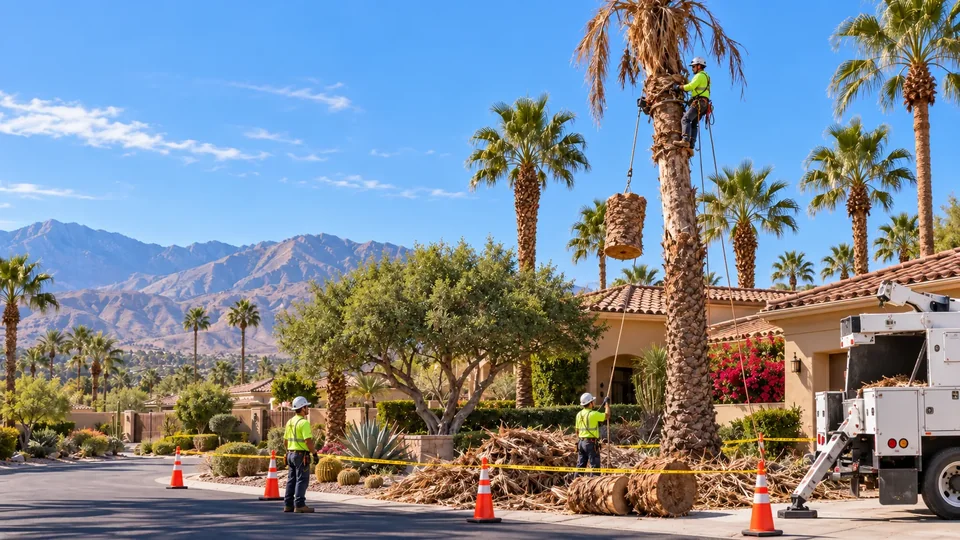
That matters because poor pruning can spread disease. UC Integrated Pest Management warns that Fusarium wilt of Canary Island date palm is commonly moved on contaminated pruning tools, and contaminated sawdust can drift as far as 100 feet. UC guidance recommends thoroughly cleaning and disinfecting tools before working on each palm and avoiding excessive pruning. That is a much more concrete reason for sanitation than simply saying "we use best practices."
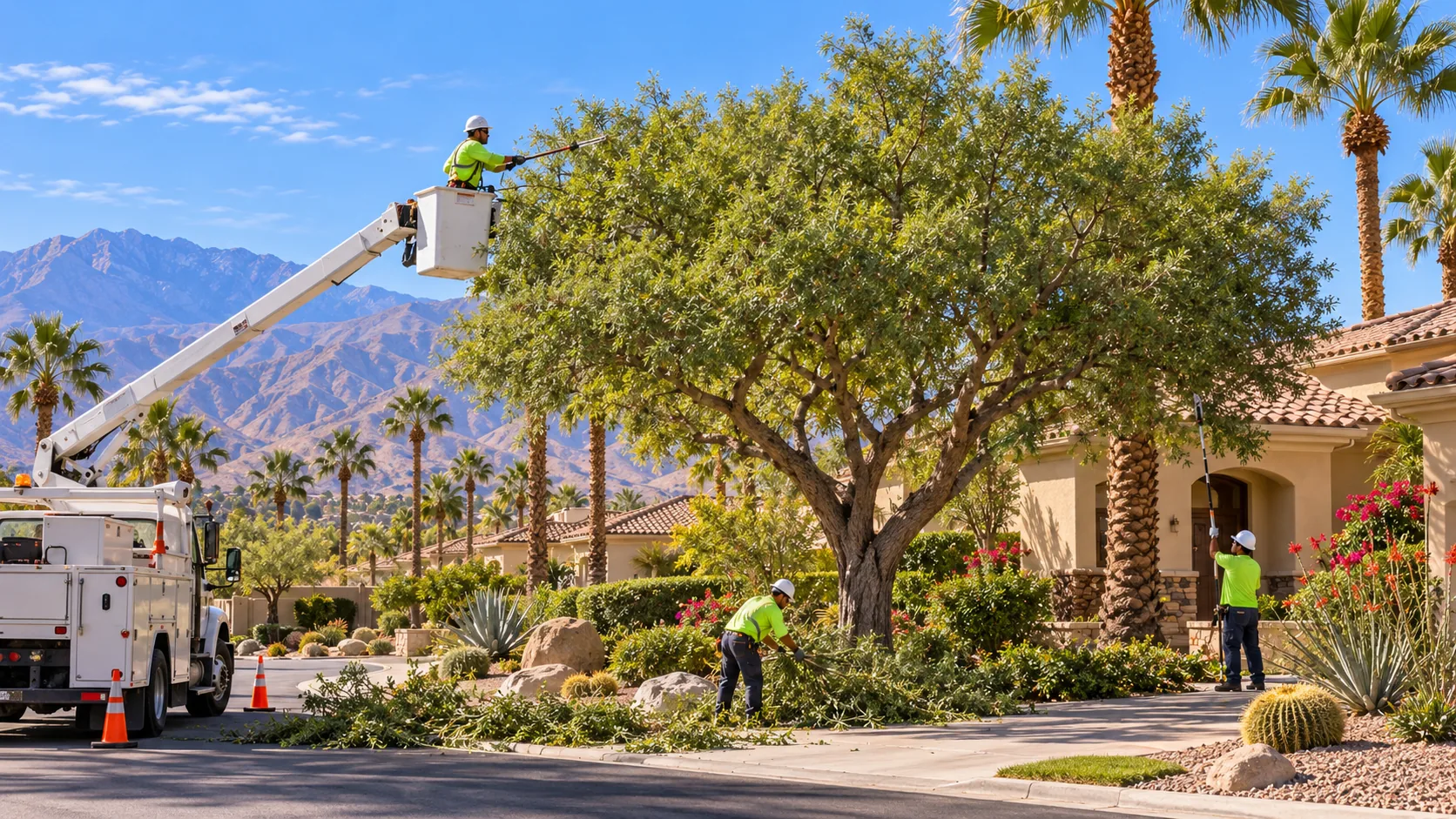
Valley heat makes timing and canopy retention important too. Western Regional Climate Center period-of-record data for Indio, a useful east-valley benchmark, puts the average July high at 106.9°F and the August high at 105.7°F, with about 182 days per year at 90°F or hotter. West-valley palms also contend with stronger wind exposure near the San Gorgonio Pass, so removing dead or hanging material without stripping healthy green fronds is a sensible valley-wide goal. Removing dead fronds and fruit stalks is one thing; stripping large amounts of healthy green foliage is another. The objective is a clean, safe palm without turning a naturally full crown into a tiny tuft at the top of the trunk.