Coachella Valley Tree Removal by the Numbers
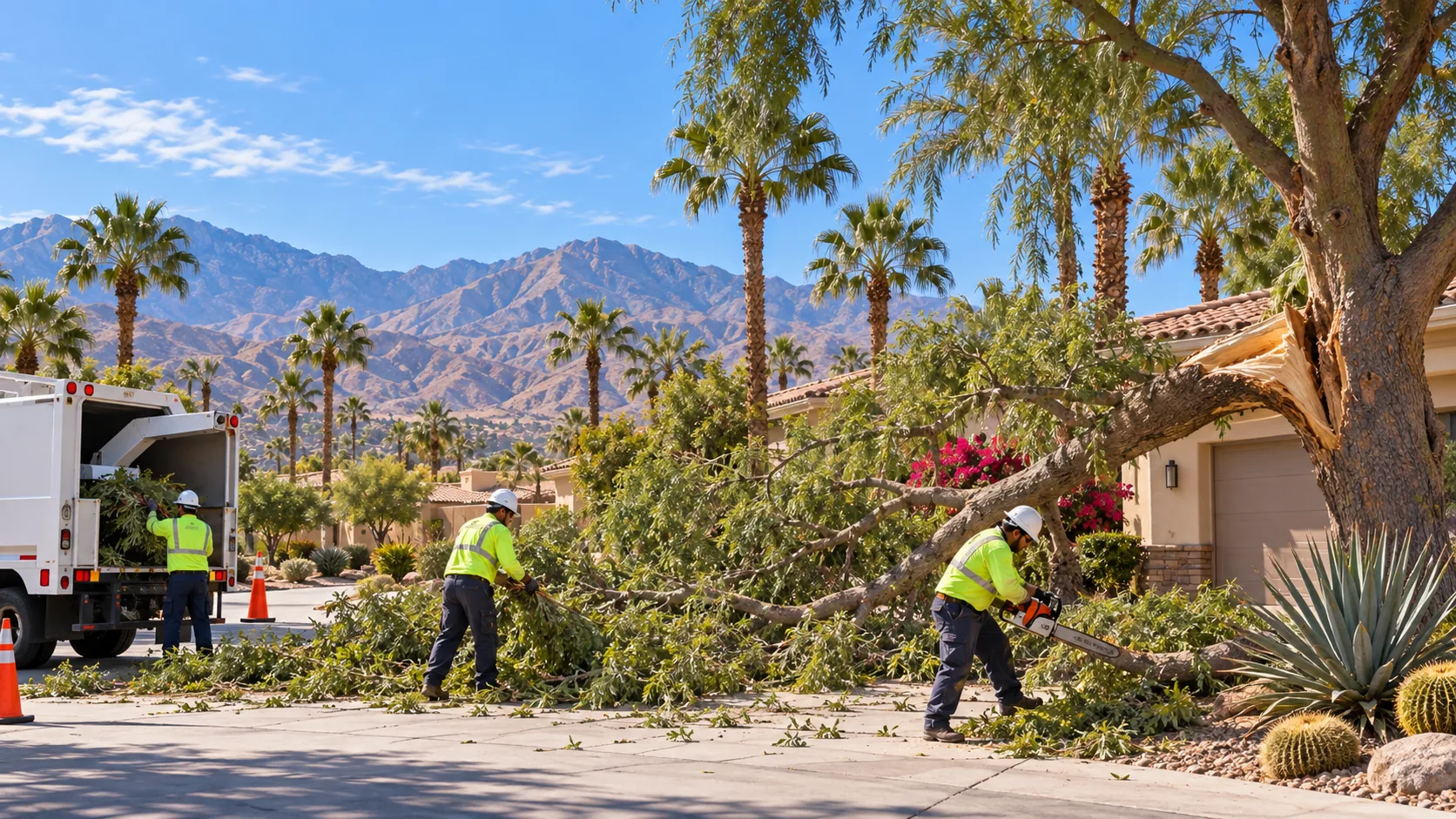
The valley gives tree-removal crews two major environmental realities to plan around: extreme heat and strong wind. Western Regional Climate Center period-of-record data for Indio shows an average July high of 106.9°F and roughly 182 days per year reaching at least 90°F. In the west valley, National Weather Service wind advisories can cover Palm Springs, Cathedral City, Desert Hot Springs, Palm Desert, La Quinta, Indio, and Coachella at the same time. One 2026 advisory called for 25-35 mph west winds, gusts to 50 mph, and isolated gusts to 65 mph through passes, with downed tree limbs listed as a potential impact.
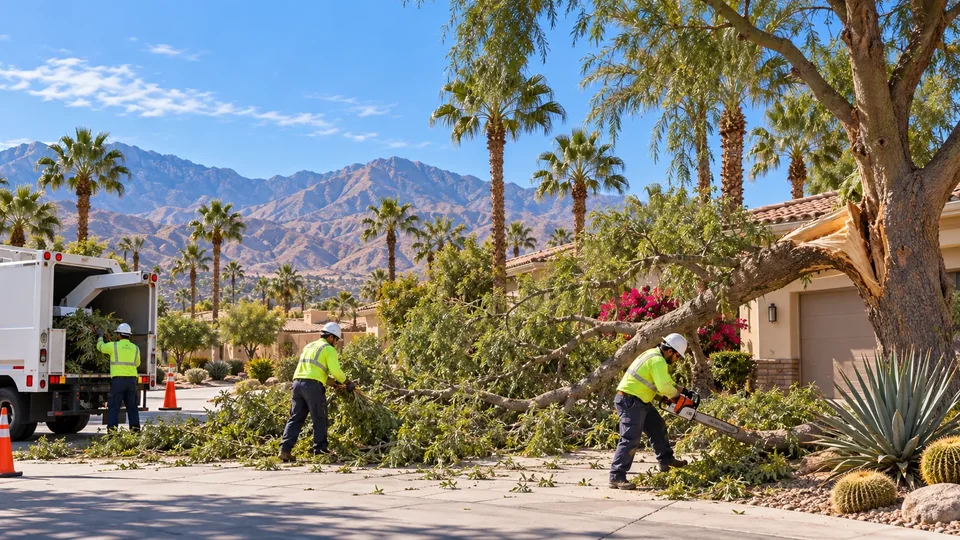
Those conditions do not mean every windy or hot day creates a removal job. They do explain why deadwood, compromised trees, and poor structure matter across the entire valley. A declining tree in Palm Springs, a large shade tree beside a Palm Desert pool, or a damaged tree in Indio can each become more difficult if the owner waits until a wind event turns a known problem into an emergency.
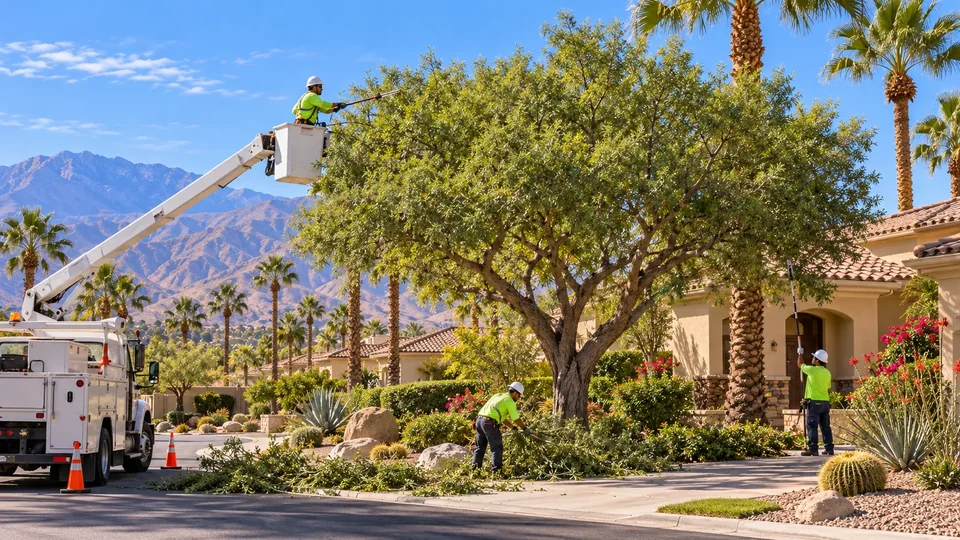
Local clearance rules also show how specific tree conflicts can become. Indio's development standards require at least 8 feet of limb clearance above public sidewalks and 13 feet above streets. Other valley cities have their own landscape and right-of-way requirements, so a removal or pruning decision should consider the property's actual jurisdiction rather than assuming one city rule applies everywhere.
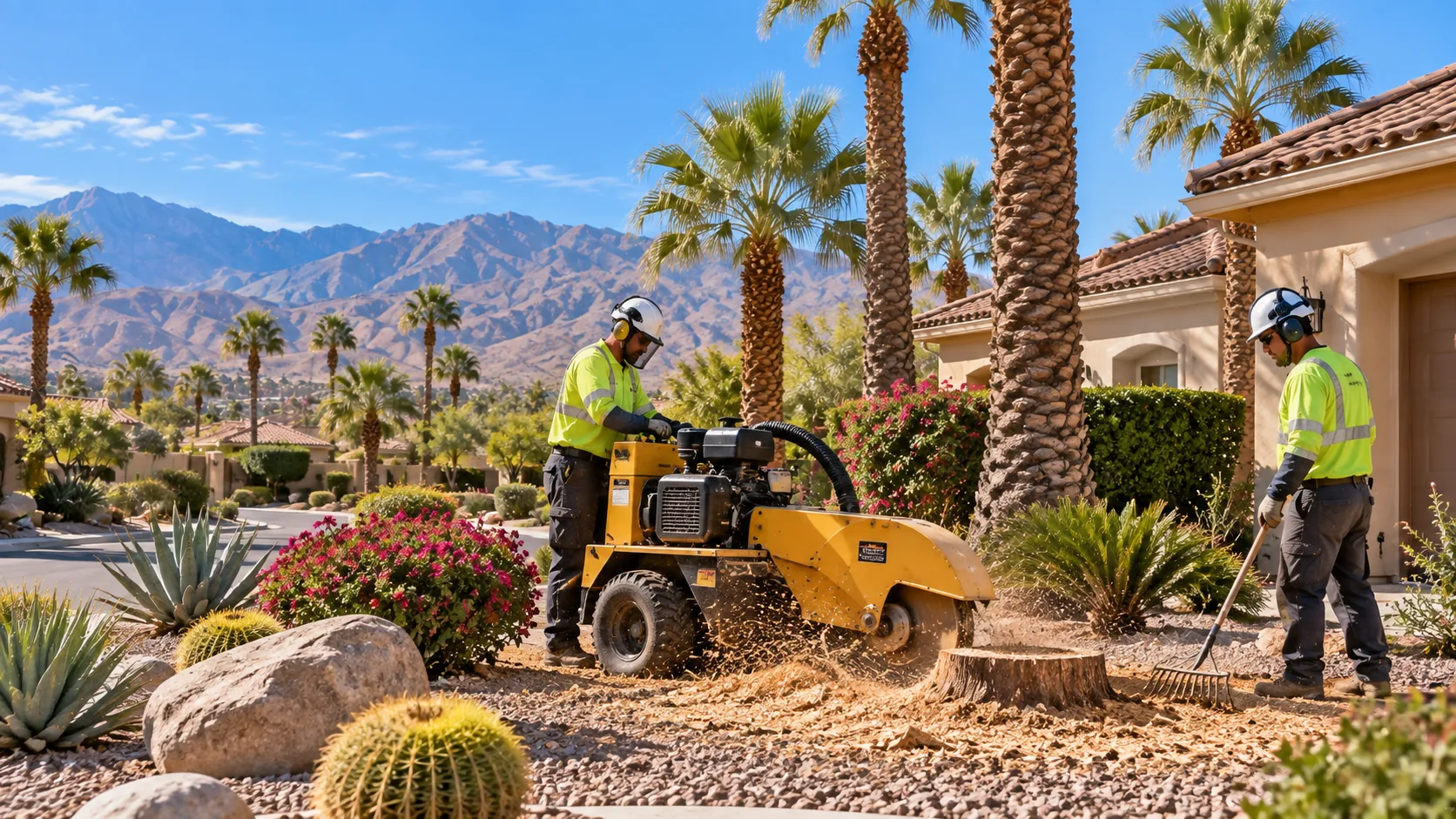
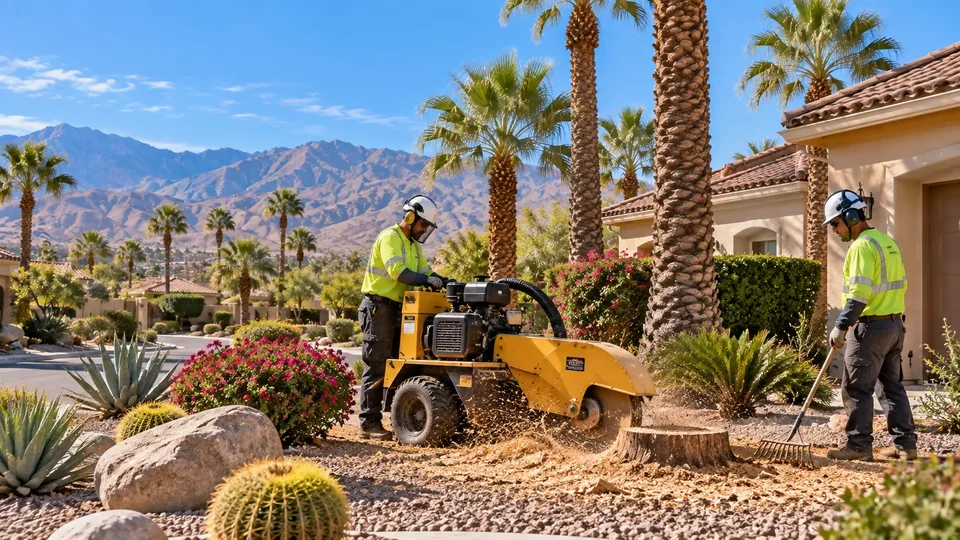
The species mix changes across the valley too. Fan palms, date palms, palo verde, mesquite, desert willow, olive, ficus, citrus, eucalyptus, pepper trees, and other ornamentals all show up in local landscapes. Removal technique changes with trunk form, wood weight, brittleness, crown spread, access, and what sits below the canopy.